Drip Septic Systems in Northwest Missouri
Been told your property needs a drip septic system? Difficult soil or limited options don’t have to stop your project.
Digger Dave installs advanced drip dispersal septic systems for new homes and replacement projects throughout Northwest Missouri and the Kansas City area. If you already have a soil report or engineered design, send it over. If you’re just getting started, we can help with that too.
What Is a Drip Septic System?
A drip septic system is an advanced onsite wastewater system that distributes treated wastewater through a network of small-diameter drip tubing installed in the soil.
Instead of sending wastewater into a traditional gravel lateral field, the system applies wastewater in controlled doses across a designed dispersal area.
This controlled distribution can make drip an option for properties where soil conditions, usable depth, terrain or other site limitations make a conventional septic system unsuitable.
Why Would a Property Need a Drip System?
Most property owners don’t start out asking for an advanced septic system. Usually, site and soil conditions lead the project in that direction.
- Difficult soil conditions
- Limited usable soil depth
- Restrictive soil conditions
- Limited suitable disposal area
- Challenging terrain
- Failed existing drain field
- Replacement-system limitations
- Property layout constraints
- Need for controlled wastewater distribution
- Site conditions unsuitable for conventional laterals
If you’ve been told the property won’t support a conventional septic system, that doesn’t necessarily mean the property can’t use onsite wastewater.
How a Drip Septic System Works
1. Wastewater Enters the Treatment System
Wastewater from the home or building first enters the treatment portion of the onsite wastewater system.
2. Wastewater Receives Additional Treatment
Drip systems typically require wastewater to receive treatment before it reaches the dispersal tubing.
3. The System Filters & Pumps the Effluent
Treated wastewater passes through filtration and is delivered to the drip field through a pump and control system.
4. Wastewater Is Applied in Controlled Doses
The drip tubing distributes wastewater across the designed dispersal area in controlled doses rather than sending a large volume to one portion of the field at once.
5. The Soil Provides Final Treatment
As with other soil-based onsite wastewater systems, the soil remains an important part of the treatment and dispersal process.
Drip Systems Are More Than Just Dripline
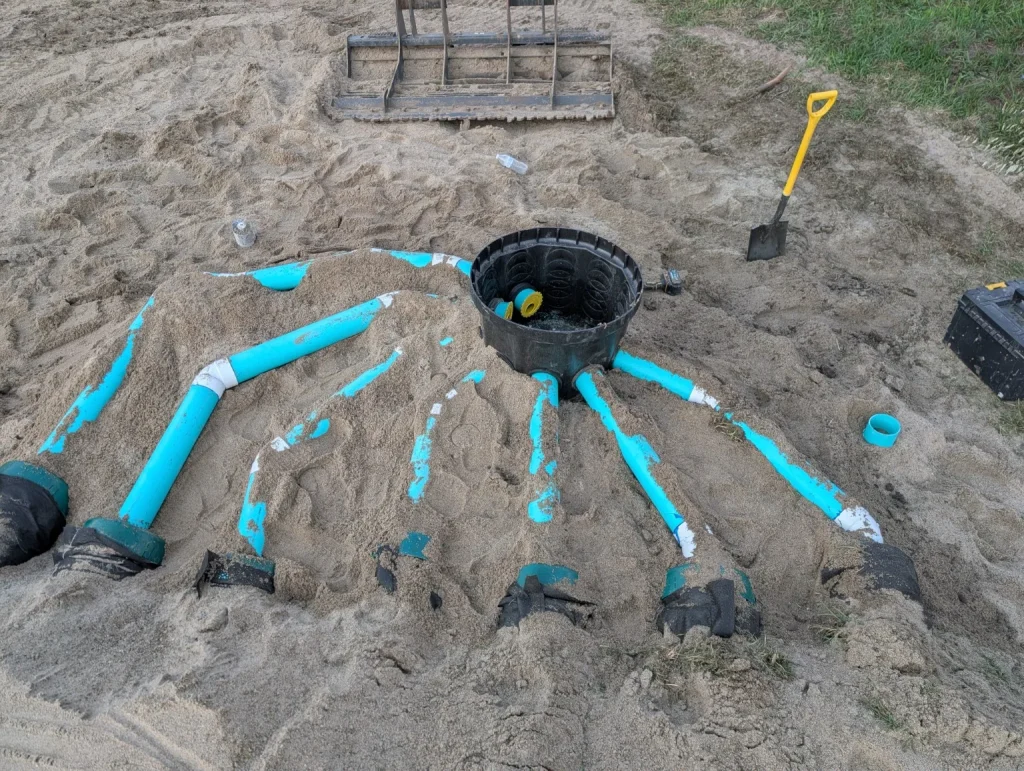
The underground drip tubing may be the part people associate with the system, but an advanced drip system includes several components working together.
- Wastewater treatment components
- Pump tank and high-head pump
- Controls and alarms
- Filtration
- Supply and return piping
- Distribution manifolds
- Drip tubing and dispersal zones
- Valves and system-access components
The entire system has to work together and be installed according to the approved design.
Drip Septic Systems for New Construction
A difficult soil report doesn’t necessarily end plans for a new home.
If the site isn’t suitable for a conventional system, a properly designed advanced system may provide another path forward.
If your soil evaluation indicates that drip dispersal should be considered, send Digger Dave the report and property information. We can help move the project into the design and installation stages.
Drip Systems for Septic Replacement
Drip can also be used as part of a replacement solution when an existing septic system has failed and the property has limited options for a new disposal area.
Older properties can be especially challenging because the home, well, driveway, outbuildings and existing septic components may already occupy much of the usable space.
A properly planned advanced system can sometimes provide an option where simply installing another conventional lateral field isn’t practical.
Drip Septic Systems Require Proper Design
Drip systems are advanced onsite wastewater systems. The treatment, pumping, filtration, controls, dispersal area and hydraulic operation need to be designed to work together.
When engineering or specialized design is required, Digger Dave can help coordinate the design process and keep the project moving toward installation.
Once the approved plans are complete, we install the system according to the design and project requirements.
Already Have a Drip Septic Design?
Send it over.
If you’ve already completed the soil evaluation and have engineered or approved drip-system plans, Digger Dave can review the project for installation.
Send us the plans, property address and any available permit information and we’ll take a look at what is required to get the project built.
Don’t Have a Design Yet?
That’s fine too.
If you’ve only been told that you may need a drip system—or you’re still trying to determine what your property can support—start with Digger Dave.
Send us the property address and any soil or septic information you already have. We’ll help determine the next step and coordinate the appropriate design process when needed.
Advanced Septic Installation Matters
Advanced systems contain more components and require more precise installation than a basic gravity septic system.
Elevation, piping, pumps, filtration, controls, distribution and dripline layout all have to match the system design.
Digger Dave has the equipment and installation experience to take advanced wastewater designs from paper to a finished system in the field.
Drip Septic Installation Throughout Northwest Missouri
Digger Dave installs drip septic systems throughout Northwest Missouri and the Kansas City area, including the Kansas City Northland and communities throughout our broader service area.
Advanced-system projects are often worth discussing even when the property is farther away. Send us the address, soil report or design and we’ll take a look at the project.
Drip Septic System FAQs
Why would I need a drip septic system?
Drip systems may be considered when soil conditions, usable soil depth, available area or other site limitations make a conventional septic system unsuitable.
Does a drip septic system use a pump?
Yes. Drip dispersal relies on pumping, filtration and controlled dosing to distribute treated wastewater through the drip field.
Does a drip system require electricity?
Yes. Pumps, controls and treatment components used in advanced drip systems require electrical power.
Does a drip septic system have an alarm?
Advanced systems commonly include controls and alarm functions to alert the property owner when certain operating conditions require attention.
Can drip work where a conventional septic system won’t?
Potentially. That’s one of the reasons advanced dispersal systems are used. Whether drip is appropriate depends on the specific soil, site conditions and approved design criteria for the property.
Are drip septic systems more expensive?
Advanced drip systems generally involve more treatment, mechanical components, controls, piping and installation work than a simple conventional system. Final cost depends on the specific design and property.
Can Digger Dave install an engineered drip system?
Yes. If you already have an engineered design, send us the plans and property information. If you don’t have the design yet, contact us and we can help get the project moving through the required steps.
Been Told You Need a Drip Septic System?
Send Digger Dave your soil report, septic design or simply the property address. Whether you’re just getting started or already have engineered plans, we’ll help get the project moving toward installation.