
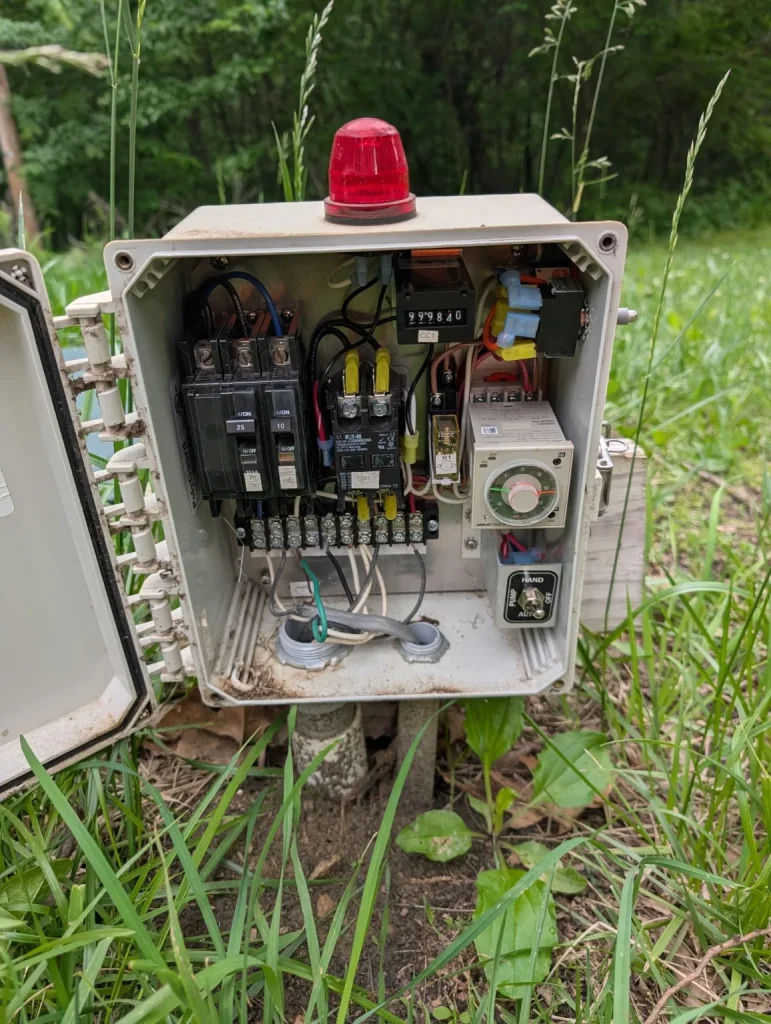
Septic Alarm Going Off?
Red light on? Septic alarm buzzing? A high-water alarm is telling you something in the system needs attention.
It could be a pump, float, electrical or control problem—or the system may be receiving more wastewater than it can move. Reduce unnecessary water use and call Digger Dave. We’ll help determine what’s causing the alarm and what needs to happen next.
What Does a Septic Alarm Mean?
Many septic systems that use pumps include an alarm to warn you when wastewater reaches an abnormal level or when another monitored condition needs attention.
The alarm itself usually isn’t the problem. It’s the warning.
The important question is why the alarm activated.
- Septic pump isn’t running
- Pump has failed
- Float isn’t operating correctly
- Electrical power has been interrupted
- Control equipment isn’t operating properly
- Discharge piping is blocked or restricted
- The system has received an unusually large amount of water
- The downstream portion of the septic system isn’t accepting wastewater properly
What Should I Do When My Septic Alarm Goes Off?
Reduce Water Use
Until you know why the alarm is on, reduce unnecessary wastewater going into the system. Avoid laundry, long showers, running the dishwasher and other heavy water use if possible.
Don’t Ignore the Alarm
A high-water condition can eventually lead to slow drains, sewage backup or wastewater surfacing if the underlying problem continues.
Call Digger Dave
Tell us what type of system you have if you know, what the alarm panel is showing, and whether you’ve noticed slow drains, backup, wet ground or other symptoms.
Common Septic Pump & Alarm Problems
- Failed septic pump
- Stuck or failed float
- High-water condition
- Pump not receiving power
- Tripped electrical circuit
- Control-panel problem
- Damaged wiring or connections
- Blocked discharge piping
- Pump unable to move wastewater
- Problem farther downstream in the system
Finding the actual cause matters. Replacing a pump won’t solve the problem if the pump wasn’t the reason the tank level rose in the first place.
Is My Septic Pump Bad?
A failed pump is one possible reason for a septic alarm, but it isn’t the only one.
A pump can be perfectly capable of operating while a float, control, electrical connection or downstream restriction prevents the system from functioning correctly.
That’s why the system should be evaluated before assuming the most expensive component needs replaced.
Could It Just Be a Septic Float?
Possibly. Pumped septic systems use floats or other level controls to tell the system when to operate and when to activate an alarm.
If a float becomes stuck, damaged or fails electrically, the pump may not receive the signal it needs to operate normally.
Float problems can sometimes look like pump failures because the result is the same: wastewater isn’t being moved when it should be.
Why Is the Red Light on My Septic System?
On many systems, a red warning light accompanies an audible alarm to indicate a condition that needs attention.
The exact meaning depends on the control panel and system, so the light shouldn’t be treated as a diagnosis by itself.
If the red light remains on, especially with a high-water alarm, slow drains or other symptoms, the system should be checked.
Can I Silence the Septic Alarm?
Many alarm panels have a silence or mute function for the audible alarm.
Silencing the buzzer does not correct the condition that caused the alarm.
If you silence the alarm, don’t forget about it. The warning light or other indicator may remain active until the underlying condition returns to normal or the problem is corrected.
What If the Alarm Comes On After Heavy Water Use?
Heavy water use can temporarily raise the wastewater level in a pumped system.
Several loads of laundry, guests, long showers or other unusually high water use can contribute to a high-water condition.
Reducing water use may allow a properly operating system to catch up. But if the alarm stays on, repeatedly returns, or is accompanied by slow drains or backup, don’t assume water use is the only cause.
What If the Alarm Keeps Coming Back?
A recurring septic alarm deserves more attention than simply resetting or silencing the panel every time it activates.
The problem may involve the pump, floats, electrical components, piping, treatment system or the ability of the downstream disposal system to accept wastewater.
If the alarm keeps returning, the goal should be to identify the underlying cause rather than repeatedly clearing the warning.
Pump Problem or Bigger Septic Problem?
Sometimes the repair is a pump, float, control or electrical component.
Other times, the alarm is only the symptom of a larger problem. If wastewater has nowhere to go because the disposal system is restricted or failing, the pump side of the system may not be the real cause.
Digger Dave works with complete septic systems, so the goal is to determine what’s actually causing the problem and move toward the appropriate repair.
Septic Pump & Alarm Help Throughout Northwest Missouri
Digger Dave helps property owners with septic pump, alarm and system problems throughout Northwest Missouri and the Kansas City area, including the Kansas City Northland and communities throughout our broader service area.
If your alarm is going off, tell us where the property is located, what the alarm panel is showing and what other symptoms you’ve noticed.
Septic Alarm FAQs
Is a septic alarm an emergency?
An alarm means the system needs attention. Reduce unnecessary water use and investigate the cause before a high-water condition turns into a backup or overflow.
Can I still flush the toilet when the septic alarm is on?
Minimize water use until you know why the alarm activated. Every flush adds more wastewater to a system that may already be experiencing a high-water condition.
Why is my septic alarm going off but the pump works?
The problem may involve a float, control, electrical issue, restriction or downstream condition rather than the pump itself. A running pump doesn’t automatically mean the entire system is operating normally.
Will the septic alarm shut off by itself?
It may if the condition that triggered it returns to normal, but that doesn’t mean every alarm should be ignored. A recurring or persistent alarm should be investigated.
Does a septic alarm mean the tank needs pumped?
Not necessarily. Pumping may be appropriate in some situations, but alarms can also result from pump, float, control, electrical, piping or downstream system problems.
Can a bad septic float cause the alarm?
Yes. Float controls are used to operate pumps and alarms in many septic systems, so a float problem can affect normal system operation.
Who should I call for a septic alarm problem?
Call Digger Dave. Tell us what the alarm is doing and what other symptoms you’re seeing, and we’ll help determine the appropriate next step.
Septic Alarm Going Off? Don’t Ignore It.
Reduce unnecessary water use and call Digger Dave. We’ll help determine whether you’re dealing with a pump, float, control, electrical or larger septic-system problem.